"Service to others is the rent you pay for your room here on Earth." – Muhammad Ali 

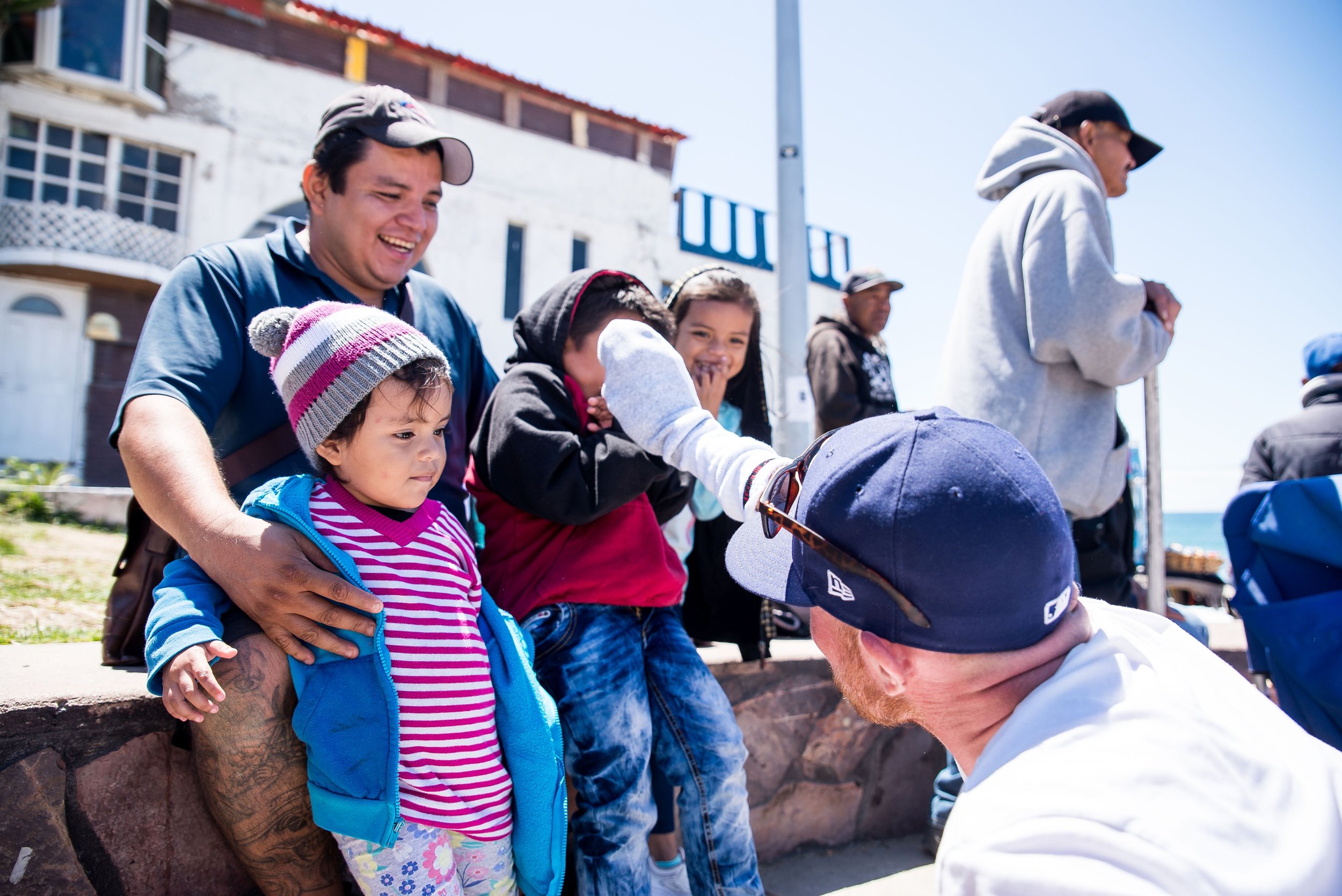
It was not his battles in the ring that define the legacy of Ali, but his life-affirming humanitarian work around the world. I didn’t comprehend this quote myself until January of 2019, when the “migrant crisis” at the U.S./Mexico border became international news, where ground zero was in Tijuana, Mexico- twenty minutes from my front door in San Diego, California. With so many international friends asking me to elaborate on the situation- for which I was ashamed that I could not- I was compelled to learn more. I began to volunteer with multiple Migrant Rights NGOs, traveling with them into Mexico in caravans providing food & clothing donations to the over-flowing refugee shelters scattered throughout the city. Although this was initially fulfilling, I soon found it to be voyeuristic & self-aggrandizing for many people working with the NGO’s (Notwithstanding, most of these trips into Tijuana were veiled agendas to recruit unpaid interns and to monetize volunteer sympathy.) I also felt that there was a crucial element missing from these donation drives- a human connection: These weren’t simply refugees, but very real people with amazing stories & bold aspirations.

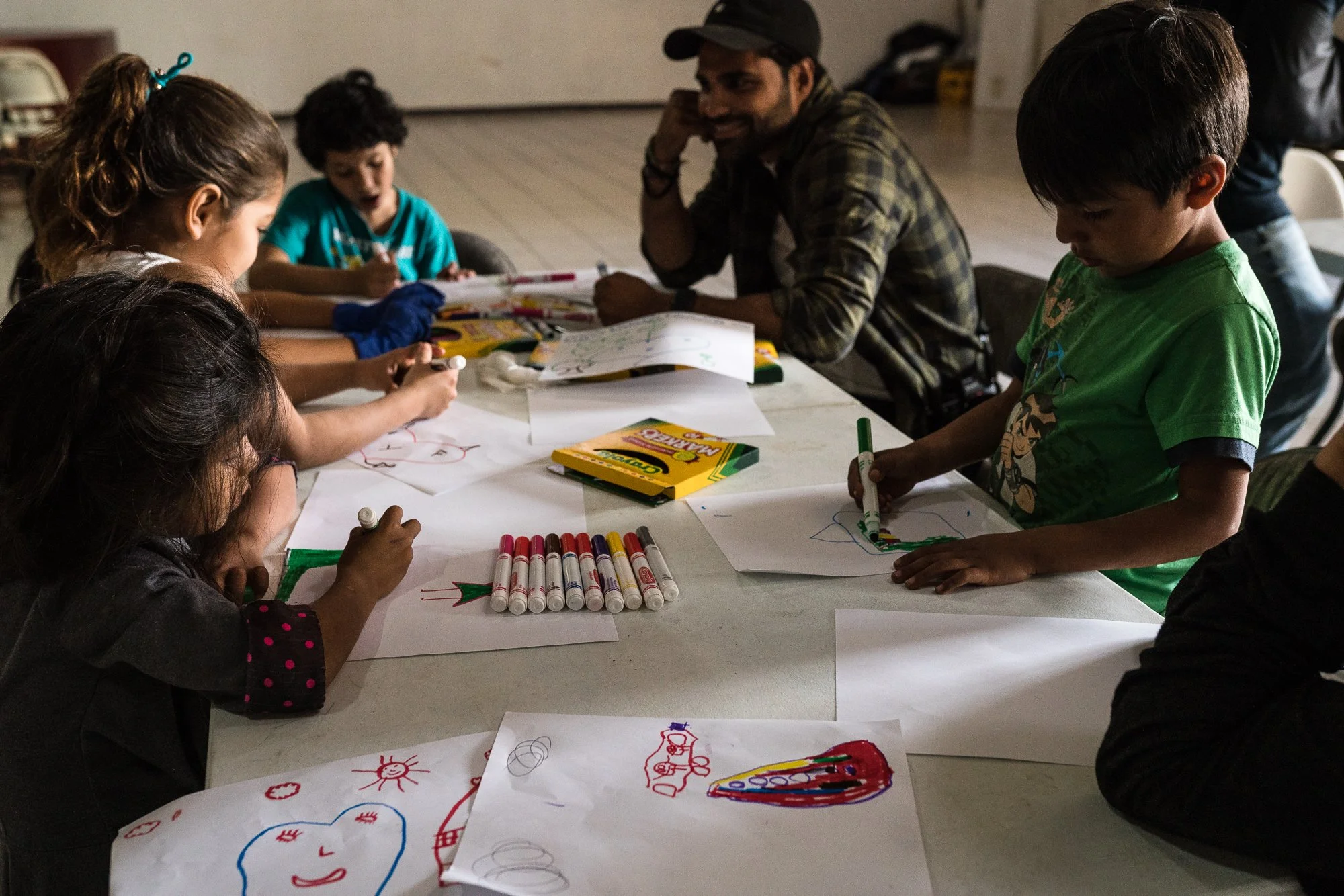
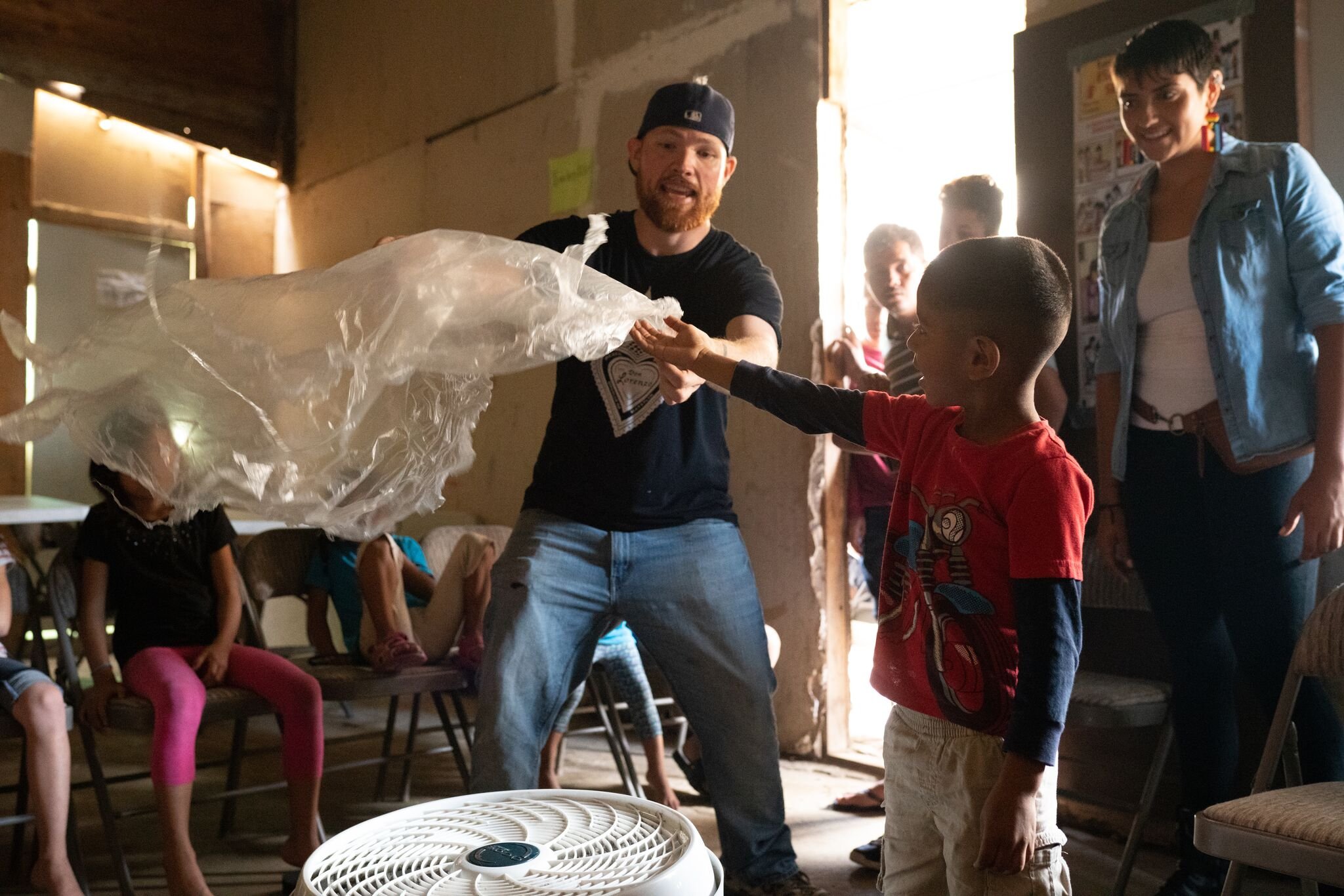
Myself and other volunteer artists set ourselves apart from these NGO’s and formed our own collective; Voz de La Frontera (“Border Voice”), where we continued to execute donation drives but prioritized Arts Engagement workshops as a tool for reminding people that the sum of their being was much more than the reductive nomenclature of “migrant” or “refugee”. Using a variety of artistic disciplines (Theatre, puppetry, photography, art, music, and cooking) we began to interact differently with these shelter communities, and found that this level of engagement was as intrinsic to their well-being as the very food and water we brought along. Furthermore, there became a growing interest among these communities to have their stories shared in the United States, where xenophobia and disinformation had reached a fever pitch. With expressed consent for all documentation, and throughout dangerous parts of Tijuana, we began to interview people and give them a platform to share their experiences. Gradually I stopped being called Adam and was known only as “Canelo”- a reference to the revered Mexican boxer of Jalisco. At first I assumed it was due to my red beard and tattoos (Truth be told many of the children thought I was the real deal), however years later Pastor Gustavo of Templo Embajadores de Jesus would affirm it was because “nunca dejaste de luchar”- “you never stopped fighting.”

Along with artists from Mexico, Colombia, and Cambodia, we began working on a multilingual touring theatre piece inspired by the remarkable stories of these people. Although our fiscal sponsorship was withdrawn for political reasons and development is paused, the necessity for this work is as great as ever during this fraught sociopolitical time of bigotry. From 2019-2022, Voz de La Frontera conducted multiple interdisciplinary arts engagement workshops, interviewed over seventy-five people, organized dozens of donation drives, and delivered thousands of pounds of food, water, clothing, and toiletries. 
Tijuana, Mexico


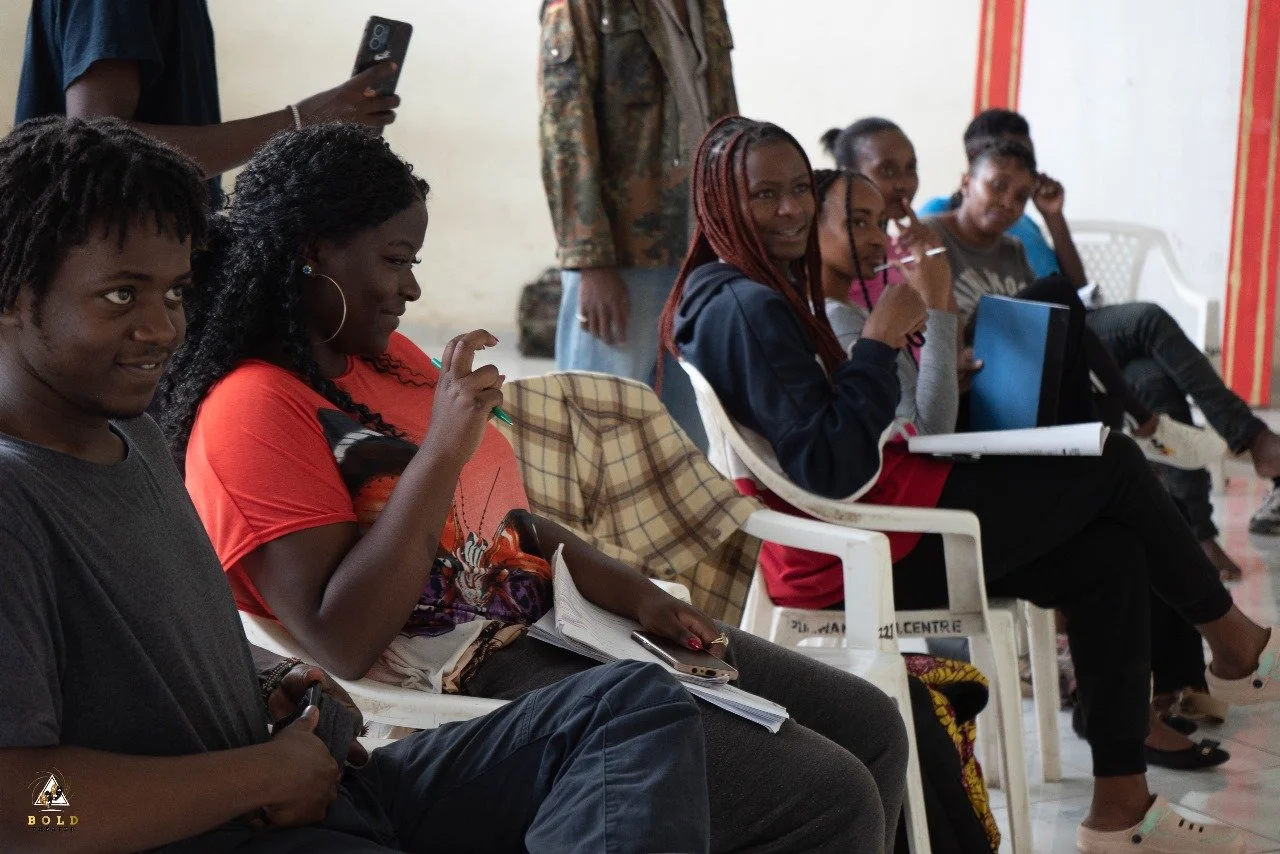
Nairobi, Kenya

The “Shengspeare” Project

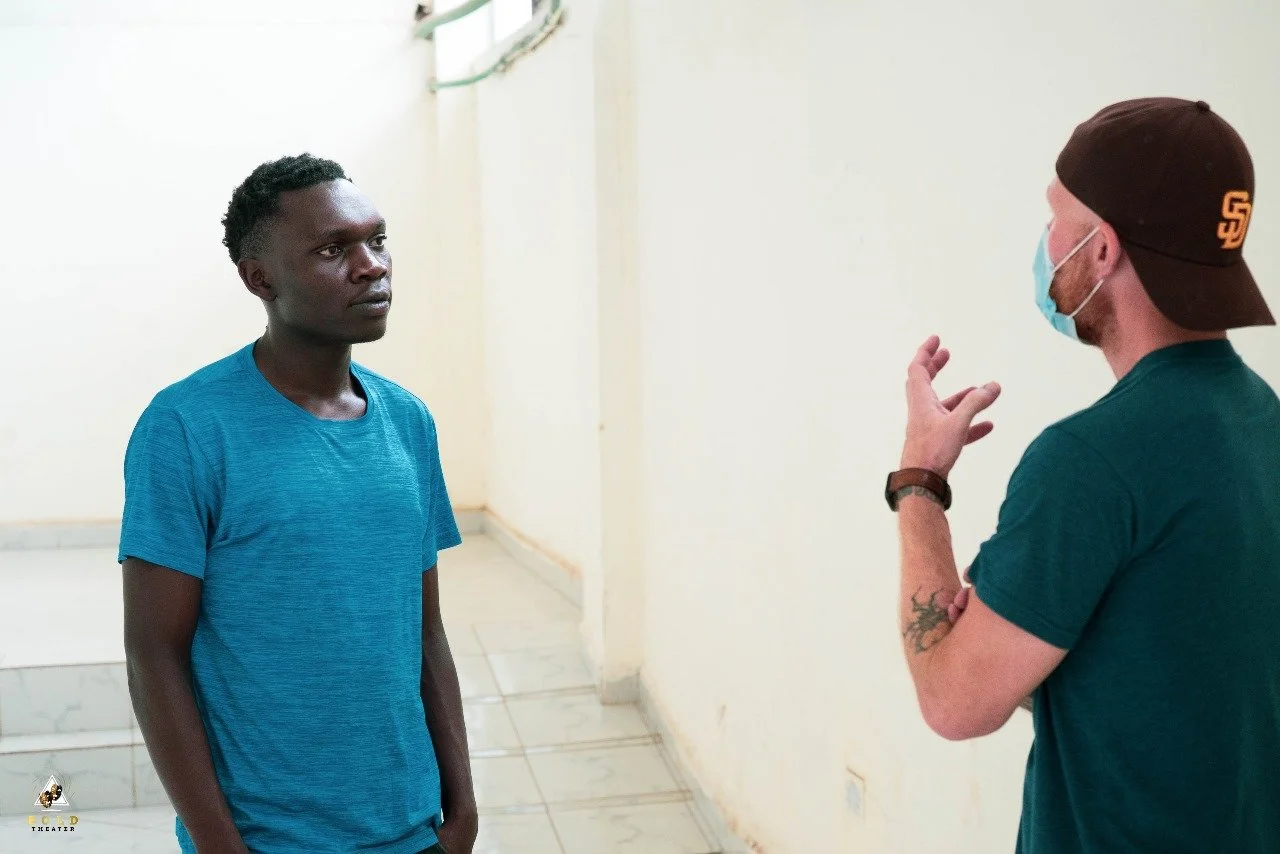
At the 2019 La MaMa Umbria International Directors Symposium, I was fortunate enough to meet Aroji Otieno, an actor, director, and educator from Nairobi, Kenya. Although many long-term relationships were built that Summer, Aroji and I forged a special kinship over shared ideology regarding theatremaking, activism, and their intersection with education.

During the Covid lockdown, Aroji launched Bold Theatre KE – a digital, education focused platform (as theatre education is all but nonexistent/ out of reach for artists throughout Nairobi) and I was grateful to be enlisted as a teaching artist. After a successful two-week “acting fundamentals” program, Aroji and I immediately began brainstorming on pushing our enthusiastic troupe: Both of us having a deep appreciation for Shakespeare, we began working on a program with accessible entry points for participants while exploring how to infuse the source text with Kenyan culture. In this exploration I learned about Sheng, one of the most widely spoken Kiswahili patois in Nairobi: An amalgamation of languages, Sheng is also regional, generational, and derided by many within Kenyan government due to its inherently coded framework. As a human seeking to uplift and amplify silenced voices, I had participants translate and perform Shakespeare through the prism of Sheng, and in so doing found it to be an exceptional platform through which to tell a Kenyan narrative. This successful experiment laid the framework for Aroji and I developing a hybrid program that would begin online and transition to in-person, with three implicit goals: Education, Outreach, and Inclusion. We took years meticulously planning how to execute this vision, and as the project unfolded, we chose to infuse the program not only with Kenyan language, music, and aesthetic, but also with a reflection of the Kenyan socio-political landscape. For this reason we chose to re-stage the politically charged Shakespearean classic Richard III in the not-too-distant future of Nairobi.

            Thus began a cross-cultural, creative expedition: Alongside master teaching artists and my fellow company members from La MaMa E.T.C. (New York), I began online workshops for a dozen hand-selected, marginalized Kenyan artists: We executed modules on basic breathwork, gesture, text analysis, and character development- while also giving them ownership of the narrative to make it more reflective of the Africa they experienced every day.

Weeks later- my first day in Kenya- I was already on a rooftop instructing that same company of beloved artists on the fundamentals of stage combat- in the rain no less! In the following two weeks and across the streets of Nairobi (quite literally), Aroji, myself, a dozen marginalized performers, several interns, Kenyan fashion designers, street artists, and a pair of virtuoso musicians- embarked on the journey of manifesting “Shengspeare” into reality.  For every day of rehearsals, we supported participants with clean water, food, stable internet, and a stipend for transportation.

            On October 11th, 2025, a team of over two dozen  arrived at St John’s Church in the slum of Korogocho, Nairobi, to present Richi Wa Utat | Richard III. Of the hundreds that came to attend that day- virtually no one had ever seen a play before- let alone Shakespeare- but what they connected with, cheered, boo’d and screamed for- was not a 400 year old yarn but a story that reflected their own lives, experienced through their own language and enjoyed with their own culture. It was the most humbling and gratifying creative experience of my life.

            Bold Theatre KE is working with myself and personnel in the U.S.A. to generate an international tour of Richi Wa Utat | Richard III for Summer/Fall of 2027. Aroji has continued to offer education and mentorship programs, and several participants from The Shengespeare project have gone on to work on the Citizen TV channel, the Kenyan National Theatre, and the Braeburn Theatre.